
 English
 Portugues
 Pусский
 Français
 العربية
 ไทย
ไทย Türk dili
 Indonesia
 Tiếng Việt


4 Core
Encuentra {palabra clave} al por mayor y citas de China. Somos fabricantes profesionales de {Palabra clave} Compañía, fábrica y exportadores especializados en {Palabra clave} con alta calidad.
Producto
Categoría:
-
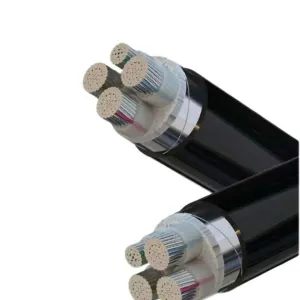
Armoured Cable BS5467 Swa Steel Wire Armored 3 Phase 4 Core 6mm 10mm 16mm 25mm Price
Su clasificación: Cable de bajo voltajeVistas: 454Número:Tiempo de liberación: 2025-08-01 07:19:29This paper introduces Swa steel wire armoured cables complying with BS5467 standard, covering four specifications of 3-phase 4-core 6mm², 10mm², 16mm², and 25mm². They are suitable for power transmission in complex environments such as industrial, commercial, and outdoor areas. Their prices, affected by specifications, purchase quantity, and market factors, have reasonable cost performance. This series of cables adopts high-purity copper conductors with excellent conductivity, ensuring efficient power transmission. The insulation layer is cross-linked polyethylene (XLPE) with a temperature resistance of 90℃ and high insulation resistance, which can stably block current in 3-phase circuits and ensure electrical safety. The core highlight is the steel wire armoured (Swa) structure, which significantly improves the cable's mechanical strength and impact resistance, resists external damage during laying and use, and has certain moisture-proof and anti-corrosion properties, adapting to various laying methods such as direct burial, bridge frame, and outdoor. Specification differences adapt to different loads: 6mm² has a current-carrying capacity of about 30A, suitable for small equipment and lighting branch lines; 10mm² has a current-carrying capacity of about 40A, applicable to medium-sized motor power distribution; 16mm² has a current-carrying capacity of about 55A, meeting workshop main line needs; 25mm² has a current-carrying capacity of about 70A, adapting to large industrial equipment. As 3-phase 4-core cables, they can balance three-phase current and are widely used in factory production lines, commercial building power distribution, outdoor engineering and other scenarios, providing safe and reliable solutions for power transmission. -
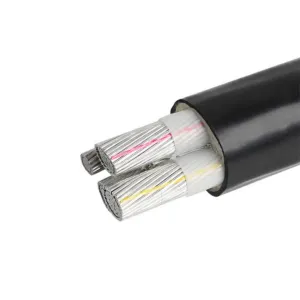
Underground Swa Cable 0.6 /1kv Copper 4 Core 120mm2 1c X 185mm2 XLPE/ PVC
Su clasificación: Cable de bajo voltajeVistas: 362Número:Tiempo de liberación: 2025-08-04 06:06:36The underground SWA cable involved in this abstract is a special cable suitable for medium and low voltage distribution systems. Its specification parameters and structural design make it widely applicable in industrial, civil, and infrastructure construction. The rated voltage of this cable is 0.6/1kV, which belongs to the category of low-voltage cables. It is mainly used in distribution networks with a rated voltage of 1kV and below, and can meet the power transmission needs of scenarios such as internal building distribution, underground laying lines, and outdoor engineering. In terms of conductor material, the cable uses high-purity copper core as the conductor. Copper has excellent electrical conductivity and thermal conductivity, with a low resistivity, which can effectively reduce energy loss during current transmission and ensure the efficiency and stability of power transmission. At the same time, copper has high mechanical strength and is not easy to break, which can adapt to complex stress conditions in the underground laying environment. The core design of the cable is 4 cores of 120mm² plus 1 core of 185mm², and this structure takes into account the diversity and safety of power transmission. Among them, the 4 cores of 120mm² are usually used to transmit the phase lines and neutral lines of three-phase alternating current to meet the power supply needs of three-phase loads; while the 1 core of 185mm² has a larger cross-section, which is generally used as a grounding wire (PE line). Its larger cross-sectional area can reduce the grounding resistance, improve the reliability of the grounding system, and in the event of leakage or short-circuit faults, it can quickly conduct the fault current into the ground to ensure the safety of personnel and equipment. The insulation layer and sheath are made of XLPE (cross-linked polyethylene) and PVC (polyvinyl chloride) materials. As an insulation layer material, XLPE has excellent electrical insulation performance, temperature resistance, and chemical corrosion resistance. Its operating temperature range is wide, and it can operate stably in an environment of -40℃ to 90℃, which can effectively resist the erosion of the insulation layer by moisture, acid, alkali substances, etc. in the underground soil. As a sheath material, PVC has good mechanical strength, wear resistance, and flame retardancy, which can provide solid physical protection for the internal structure of the cable, prevent mechanical damage during laying, and delay the aging effect of the external environment on the cable. In addition, the cable has an SWA (steel wire armoring) structure, that is, one or more layers of steel tape armoring are added inside the sheath. The main function of steel armoring is to enhance the mechanical protection ability of the cable, enabling it to withstand large tension, pressure, and impact force. It is suitable for underground installation methods such as direct buried laying and pipe laying, effectively resisting damage from external factors such as soil pressure and stone extrusion. Overall, this underground SWA cable, with its reasonable structural design, high-quality material selection, and reliable performance parameters, can meet the needs of safe, efficient, and long-term operation in underground distribution environments. It is an ideal choice for low-voltage distribution systems in industrial plants, residential communities, municipal engineering, and other fields. -
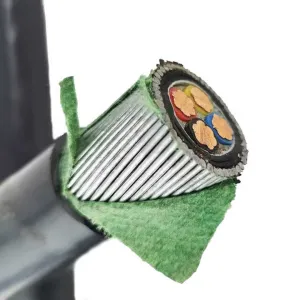
Yvv Cyy-F Nyy Power Cable 4 Core 35mm2 Copper Ground PVC Low Voltage 4X35
Su clasificación: Cable de bajo voltajeVistas: 381Número:Tiempo de liberación: 2025-08-04 07:17:41The Yvv Cyy-F Nyy 4-core 35mm² copper ground PVC low-voltage cable (model identified as 4X35) is a high-performance cable designed specifically for low-voltage power transmission scenarios. It integrates reliability, safety, and durability, and is widely used in power distribution connections for industrial, commercial, and civil power systems. The core structure of the cable features a 4-core design, with each conductor having a cross-sectional area of 35mm², using high-purity electrolytic copper as the conductive material. High-purity copper not only has excellent conductivity, which can effectively reduce energy consumption and heat generation during current transmission, but also has good ductility and corrosion resistance, ensuring that the cable maintains stable conductive efficiency during long-term use. The 4-core layout includes a dedicated grounding core, which strictly complies with electrical safety regulations. It can timely conduct leakage current, significantly reducing the risk of electric shock and equipment failure. It is particularly suitable for places with high safety requirements, such as factory workshops, commercial buildings, and large public facilities. The insulation and sheath materials of the cable are made of high-quality polyvinyl chloride (PVC). PVC material has excellent insulation performance, which can effectively isolate current and prevent electric leakage. At the same time, it has good corrosion resistance, weather resistance, and mechanical strength, which can resist acid-base environments, humid climates, and a certain degree of physical wear, extending the service life of the cable. In addition, PVC material also has flame-retardant properties, which can delay the spread of fire to a certain extent, providing additional protection for the safe operation of the power system. In terms of installation and use, the cable has good flexibility, making it easy to lay in complex environments. It can adapt to different construction needs, whether it is buried, piped, or overhead installation. Its rated voltage meets the standards of low-voltage power systems and can be well matched with various power distribution equipment, motors, electrical appliances, etc., ensuring the stability and efficiency of power transmission. To sum up, the Yvv Cyy-F Nyy 4-core 35mm² copper ground PVC low-voltage cable, with its high-quality copper conductors, reliable PVC insulation sheath, scientific 4-core structure, and comprehensive safety design, has become an ideal choice in the field of low-voltage power transmission. It can provide stable, safe, and long-lasting power support for various scenarios. -
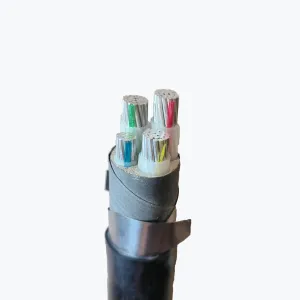
Cu XLPE Swa PVC 16mm2 16 Sq mm Copper Armoured Cable 4 Core 25mm Price
Su clasificación: Cable de bajo voltajeVistas: 410Número:Tiempo de liberación: 2025-08-08 07:10:02Cu XLPE Swa PVC 16mm² (16 square millimeters) and 25mm² (25 square millimeters) 4-core copper armoured cables are high-performance dedicated wires in industrial and power transmission fields, integrating high safety, strong durability, and wide applicability, playing a key role in power distribution in complex environments. In terms of model and structure, "Cu" clearly indicates that the conductor material is high-purity electrolytic copper, whose excellent conductivity can effectively reduce energy loss during current transmission and ensure the efficiency of power delivery; "XLPE" stands for cross-linked polyethylene insulation layer. Compared with traditional PVC insulation, it has higher temperature resistance (long-term operating temperature up to 90℃), chemical corrosion resistance, and insulation strength, making it adaptable to harsher working environments; "Swa" refers to Steel Wire Armour. By wrapping one or more layers of steel strips around the cable core, it significantly enhances the mechanical strength of the cable, resisting external extrusion, impact, and gnawing by rodents, especially suitable for scenarios prone to mechanical damage such as direct burial and bridge laying; "PVC" is the outer sheath, which not only further protects the armoured layer but also has good moisture resistance and UV resistance, extending the service life of the cable. The "4-core" design means the cable contains 4 independently insulated copper conductors, meeting the needs of three-phase four-wire power supply systems, applicable to power transmission, large-scale equipment power supply, and other scenarios. In terms of specifications, 16mm² and 25mm² refer to the cross-sectional area of a single conductor, directly determining the current-carrying capacity of the cable. The 16mm² cable is suitable for medium-power equipment, such as small motors and workshop production lines; the 25mm² cable can carry larger currents, often used in large industrial machinery, main power supply lines of buildings, etc. Both comply with the International Electrotechnical Commission (IEC) or relevant national standards, ensuring safe operation under rated voltage (usually 0.6/1kV). In application scenarios, such cables are widely used in outdoor buried laying, tunnel projects, factory workshops, high-rise building distribution trunks, etc., due to their armoured structure and weather resistance. For example, in municipal engineering, they can be used as underground transmission lines for street lamp systems; in industrial plants, they provide stable power for heavy machinery; in commercial complexes, they serve as main cables from the distribution room to each floor. Their steel tape armouring feature eliminates the need for additional pipe protection, reducing construction costs and complexity. In terms of price, the pricing of Cu XLPE Swa PVC 4-core cables is affected by multiple factors: the cross-sectional area of the conductor is a core factor, and the 25mm² cable is more expensive than the 16mm² due to more copper usage; fluctuations in market copper prices directly affect costs, and armouring processes, insulation material quality, and brand premiums also lead to price differences. In addition, purchase quantity, transportation distance, and whether installation services are included will also have an impact on the final quotation. Generally, the unit price of 16mm² cables ranges from tens to hundreds of yuan per meter, and 25mm² is higher. The specific price is subject to the real-time quotation of suppliers. In summary, this series of cables, with high-quality materials, robust structure, and flexible specification options, have become an ideal choice for industrial and civil power transmission. Although their prices are affected by multiple factors, their comprehensive performance and durability give them high cost-effectiveness. -
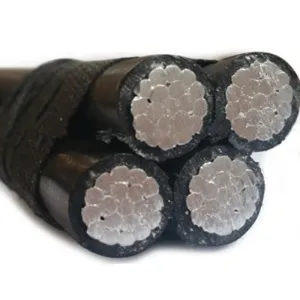
ABC Cable Aerial Bundled Cable 16mm2 25mm2 Aluminum Wire AAAC Overhead Power Cable 4 Core Weather Resistance UV Proof Whole Sale on a Drum
Su clasificación: Cables de línea aislados de arribaVistas: 262Número:Tiempo de liberación: 2025-08-27 02:40:34This product is an ABC Aerial Bundled Cable, a high-efficiency power transmission equipment specifically designed for overhead power transmission scenarios. Its core specifications cover two aluminum wire cross-sections: 16mm² and 25mm². It adopts a 4-core structure and AAAC (Aluminum Alloy Conductors) material, featuring excellent weather resistance and UV protection performance. It is available for wholesale in full drum packaging, and can be fully adapted to urban and rural distribution networks, power supply lines in remote areas, and temporary power transmission scenarios, providing users with a cost-effective and highly reliable overhead power transmission solution. In terms of core specifications and structural design, the cable clearly adopts a 4-core configuration, with conductor cross-sections available in 16mm² and 25mm². Both specifications have undergone precise electrical load calculation and can meet the needs of overhead power transmission scenarios with different power requirements. The 16mm² specification is suitable for small and medium-capacity power transmission, such as power supply for scattered rural households and renovation of small village distribution networks; the 25mm² specification is adapted to areas with slightly higher power load, such as centralized residential areas in towns, small industrial parks, or power transmission for agricultural irrigation. The 4-core structure design not only ensures the stable transmission of three-phase current but also improves the overall mechanical stability of the cable through reasonable core arrangement, avoiding problems such as deviation and wear of single-core cables caused by external forces during overhead installation. At the same time, it simplifies the installation process and reduces the labor and time costs of separately erecting multiple cores. The conductor material is AAAC aluminum alloy stranded wire, which has significant advantages compared with traditional pure aluminum conductors or steel-cored aluminum stranded wires. Firstly, it has higher mechanical strength, excellent tensile performance, and fatigue resistance, which can effectively resist mechanical stress caused by wind, ice coating, and temperature changes in the overhead environment, reduce the risk of conductor breakage and deformation, and extend the service life of the cable. Secondly, the aluminum alloy material has stable electrical conductivity, which is slightly lower than pure copper but much higher than ordinary steel-core conductors, and is lighter in weight. During overhead installation, it can reduce the load-bearing pressure of the tower, lowering the tower selection cost and installation difficulty in engineering construction. In addition, the AAAC conductor also has excellent corrosion resistance, and can operate stably in complex environments such as humidity, heavy fog, coastal areas, or industrial pollution, reducing the decline in transmission efficiency or line failures caused by conductor corrosion. Weather resistance and UV protection performance are among the core highlights of this cable. In response to the characteristics of overhead cables being exposed to the outdoor environment for a long time, the product has been specially optimized in material selection and production process: the outer insulation and sheath materials are added with UV stabilizers, which can effectively resist material aging and cracking caused by strong UV radiation, and avoid leakage and short-circuit risks caused by insulation layer failure; at the same time, the overall material has excellent high and low-temperature resistance, and can work stably in a wide temperature range from -40℃ to 80℃, adapting to extreme weather such as high-temperature exposure, low-temperature freezing and thawing, heavy rain, and heavy snow. It ensures that overhead lines in different climate regions can continuously and reliably transmit power, and is especially suitable for areas with harsh natural environments such as plateaus, mountainous areas, and coastal regions. In terms of application scenarios and market service models, the cable has strong adaptability. In the construction of urban and rural distribution networks, it can be used as a power transmission carrier for main roads or branch lines, replacing traditional bare wires to improve line safety and transmission efficiency; in power supply projects in remote villages or mountainous areas, its lightweight design and weather resistance can reduce the difficulty of installation in complex terrain and reduce the frequency of later maintenance; in temporary power demand scenarios, such as large-scale events and temporary power supply for engineering construction, the full-drum packaging form is convenient for rapid deployment and recycling. At the same time, the product is mainly sold in wholesale mode, with the entire roll wound on a dedicated cable drum. This not only facilitates storage and transportation but also prevents the cable from being damaged during handling, meeting the large-volume procurement needs of power engineering enterprises, distributors, and other customers, and effectively reducing procurement costs and supply chain management difficulties. In terms of overall value, this ABC aerial bundled cable achieves the comprehensive advantages of "reliable performance, controllable cost, and convenient deployment" through precise specification configuration, high-quality AAAC conductor material, enhanced weather resistance and UV protection performance, and a flexible wholesale packaging mode. It can not only meet the core needs of different overhead power transmission scenarios but also reduce the overall investment of users through bulk supply, providing highly adaptable product support for the construction and transformation of medium and low-voltage overhead lines in the power industry, helping to improve the stability and economy of regional power transmission, and promoting the development of distribution network construction towards high efficiency and low cost. -
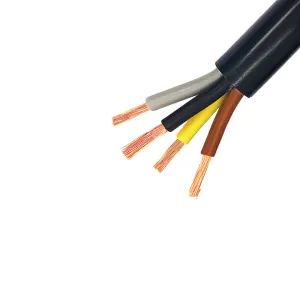
RVV Cable 4 Core 1.5mm² 2.5mm² 4mm² 6mm² Flexible PVC Power Wire for Electrical Wiring
Su clasificación: Alambre de construcciónVistas: 329Número:Tiempo de liberación: 2025-08-28 08:38:03The RVV 4-core 1.5mm²/2.5mm²/4mm²/6mm² flexible PVC power wire, a common product in the electrical wiring field, is widely used in home electricity use, commercial place power transmission, and industrial equipment power supply scenarios due to its multi-specification adaptability, flexible structural design, and reliable safety performance. Its core advantages first lie in the coordinated design of the conductor and insulation structure: the conductor is made of high-purity oxygen-free copper (purity ≥99.99%), stranded with multiple strands of fine copper wire (1.5mm² consists of 19 strands of Φ0.32mm copper wire, 2.5mm² of 19 strands of Φ0.41mm copper wire, 4mm² of 37 strands of Φ0.37mm copper wire, and 6mm² of 49 strands of Φ0.41mm copper wire). This not only ensures excellent electrical conductivity (DC resistance at 20℃ is ≤13.3Ω/km for 1.5mm², ≤8.21Ω/km for 2.5mm², ≤5.38Ω/km for 4mm², and ≤3.08Ω/km for 6mm²) but also improves the cable flexibility through the stranding process. The minimum bending radius is only 4 times the cable outer diameter (taking the 2.5mm² model as an example, with an outer diameter of about 6.5mm, the bending radius only needs 26mm), which can easily adapt to complex wiring environments such as wall concealed pipes and narrow spaces inside equipment, avoiding the risk of conductor breakage during construction. The insulation and sheath layers are made of environmentally friendly PVC material (complying with the RoHS standard), which has excellent temperature resistance and corrosion resistance after optimization with a special formula: the long-term operating temperature range is -15℃ to 70℃, and the short-term overload temperature can reach 105℃. In high-temperature environments in summer (such as 50-60℃ inside distribution boxes) or low-temperature environments in winter ( -10℃ outdoors in northern China), it can still maintain stable performance without softening or cracking; at the same time, the PVC material is oil-resistant and acid-alkali-resistant. In kitchen oil-polluted environments and light chemical corrosion scenarios in laboratories, the sheath layer is not easy to age and break, effectively extending the service life of the cable (up to 8-10 years under normal use). In addition, the sheath layer has also passed the GB/T 18380.1-2008 ZC-grade flame retardant test, self-extinguishing within 30 seconds when exposed to fire, and does not release toxic or harmful gases (chlorine release ≤5mg/g), providing important protection for electrical wiring safety. From the perspective of application scenarios, the four specifications accurately match different electricity needs: the 1.5mm² model is mainly used for home weak current control and small equipment power supply, such as smart door lock power supplies, curtain motor wiring, and power cords for small home appliances (humidifiers, air purifiers). Its safe current-carrying capacity is 16-20A (when laid in the air), which can carry a power of ≤4.4kW, meeting the long-term stable operation of low-power equipment; the 2.5mm² model is suitable for home strong current circuits and ordinary sockets in commercial places, such as living room air conditioners (1.5 HP), bedroom electric heaters (2000W), and office computer cluster power supply. The current-carrying capacity is 25-32A, adapting to a power of ≤7kW, taking into account daily electricity use and short-term overload needs; the 4mm² model is mostly used for high-power equipment in commercial places and small industrial power circuits, such as shopping mall lighting main lines, restaurant commercial freezers (3000W), and workshop small motors (4kW) power supply. The current-carrying capacity is 32-40A, which can cope with continuous high-power operation; the 6mm² model is suitable for building main incoming lines and medium-sized industrial equipment power supply, such as villa entry branch circuits, factory air compressors (7.5kW), and elevator traveling cable auxiliary power supply. The current-carrying capacity is 40-50A, ensuring no overload heating during high-current transmission. In terms of construction and practicality, this series of cables also has significant advantages: the cable surface is printed with clear product identification (model, specification, rated voltage, production batch number, and implementation standard GB/T 5023.5-2008), using wear-resistant ink printing that remains legible after long-term friction, facilitating specification verification during construction and traceability during later maintenance; the 4-core structure design enables simultaneous transmission of power and signals. For example, in an intelligent monitoring system, 1 core is used for equipment power supply, 2 cores for signal transmission, and 1 core as a backup, reducing the number of cable layouts and lowering construction costs; in addition, the lightweight design of the cable (weight per kilometer is about 18kg for 1.5mm² and 55kg for 6mm²) reduces the handling intensity of high-altitude wiring and long-distance pipe threading. Combined with the flexible structure, the pipe threading resistance is reduced by 30% compared with single-strand rigid wires, improving construction efficiency. -
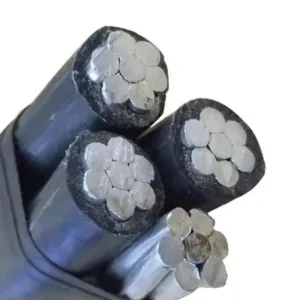
0.6/1kv ABC Cable - 4 Core (3pH + N) Al/PVC
Su clasificación: Cables de línea aislados de arribaVistas: 295Número:Tiempo de liberación: 2025-09-03 03:49:04The 0.6/1kV ABC Cable - 4 Core (3pH + N) Al/PVC is a versatile and cost-effective aerial bundled cable (ABC) engineered for low-to-medium voltage power distribution, tailored to meet the demands of residential, commercial, and light industrial electrical networks. Its design integrates functionality, durability, and ease of installation, making it a preferred choice for utilities, electrical contractors, and infrastructure projects where reliable three-phase power delivery—paired with a dedicated neutral conductor—is essential. By breaking down its key components, performance attributes, and application scope, this summary highlights why the cable stands out in overhead power distribution systems. At the core of the cable’s identity is its 4-core configuration (3pH + N), a design optimized for three-phase power systems—the backbone of modern electrical grids. The “3pH” refers to three insulated phase conductors, which work together to transmit alternating current (AC) efficiently, minimizing power loss and ensuring balanced load distribution across residential neighborhoods, small commercial complexes, or light industrial facilities. Three-phase systems are favored over single-phase setups for their ability to power larger loads (such as air conditioning units, industrial motors, or commercial lighting) without voltage fluctuations, making them indispensable for areas with mixed residential and commercial usage. Complementing the three phase conductors is the “N” (neutral conductor), a critical component that provides a return path for current, stabilizes phase voltages, and enhances safety by grounding excess current. Unlike 3-core ABC cables that rely on external grounding, the integrated neutral conductor eliminates the need for separate grounding wires, simplifying installation and reducing the risk of electrical faults. The “Al” in the cable’s designation denotes aluminum as the conductor material—a choice driven by performance, cost, and practicality for overhead applications. Aluminum offers a compelling strength-to-weight ratio: it is approximately 30% lighter than copper (the other common conductor material) while maintaining sufficient electrical conductivity (about 61% of copper’s conductivity). For overhead cables, this lighter weight translates to reduced mechanical stress on utility poles and support structures, extending the lifespan of both the cable and the infrastructure it relies on. Additionally, aluminum is significantly more cost-effective than copper, making the cable an economical option for large-scale distribution projects—such as new residential developments or rural electrification initiatives—without compromising on performance. Modern aluminum conductors in this cable are treated with an anti-corrosion coating (typically zinc or aluminum oxide), addressing historical concerns about oxidation and ensuring long-term reliability in outdoor environments, from humid coastal areas to dry inland regions. The “PVC” insulation further defines the cable’s performance and suitability for specific applications. Polyvinyl chloride (PVC) is a widely used insulation material for low-to-medium voltage cables, valued for its balance of affordability, flexibility, and basic environmental resistance. PVC insulation has a continuous operating temperature range of -15°C to 70°C, making it ideal for temperate climates where extreme heat or cold is rare—such as most urban and suburban areas. It provides effective electrical insulation, with a dielectric strength of approximately 15 kV/mm, preventing electrical breakdown and minimizing the risk of short circuits. PVC also exhibits good resistance to water, oils, and common environmental pollutants, ensuring the insulation remains intact even when exposed to rain, dust, or minor chemical splashes. While PVC is not as heat-resistant as cross-linked polyethylene (XLPE) (used in higher-temperature cables), its flexibility simplifies installation: the cable can be easily bent around utility poles or routed through tight spaces without cracking, reducing labor time and complexity. The “ABC” (aerial bundled cable) design is another defining feature, setting this product apart from traditional overhead cables. Aerial bundled cables consolidate multiple conductors into a single, pre-assembled unit, as opposed to loose conductors hung separately from utility poles. This design offers several advantages: first, it reduces clutter on utility poles, improving aesthetics—a key consideration in residential areas or urban landscapes. Second, the bundled structure protects conductors from physical damage (such as from tree branches or wildlife) and reduces the risk of phase-to-phase short circuits, which are common with loose conductors. Third, ABC cables are faster to install: instead of stringing individual conductors and grounding wires, installers can deploy the entire bundled unit in one pass, cutting installation time by up to 50% compared to traditional setups. For emergency power restoration—such as after a storm or accident—this speed is invaluable, minimizing downtime for end-users. The 0.6/1kV voltage rating aligns the cable with low-to-medium voltage distribution needs. The 0.6kV value represents the maximum phase-to-neutral voltage (the voltage between any phase conductor and the neutral), while 1kV is the maximum phase-to-phase voltage (the voltage between any two phase conductors). This rating positions the cable between low-voltage cables (below 0.6kV, used for localized loads like individual homes) and medium-voltage cables (above 1kV, used for long-distance transmission). It is perfectly suited for distributing power from medium-voltage transformers (which step down high-voltage grid power to 1kV) to low-voltage distribution boards in residential or commercial buildings, filling a critical gap in the electrical supply chain. In terms of applications, the 0.6/1kV ABC Cable - 4 Core (3pH + N) Al/PVC is highly versatile. In urban and suburban areas, it is used to supply power to apartment complexes, shopping plazas, and mixed-use developments, where its compact bundled design and integrated neutral conductor reduce installation complexity. For example, in a new residential neighborhood with 200 homes, the cable can efficiently distribute power to each household while supporting shared amenities like community centers or street lighting. In rural areas, it is ideal for electrification projects that connect remote villages to the grid, as its lightweight aluminum conductors and PVC insulation can withstand moderate weather conditions (such as rain or wind) without frequent maintenance. The cable also finds use in temporary power setups, such as construction sites or outdoor events, where its easy installation and reliable performance ensure a steady power supply for tools, equipment, or temporary lighting. Compliance with industry standards further reinforces the cable’s reliability. Most manufacturers design this cable to meet international standards such as IEC 60502 (for power cables with extruded insulation) or national standards like ANSI/ICEA S-94-649 (for aerial bundled cables in North America) and BS EN 50525 (for European markets). These standards mandate rigorous testing, including voltage withstand tests (to verify insulation integrity), thermal cycling tests (to ensure performance under temperature changes), and mechanical strength tests (to confirm resistance to pulling or bending). Compliance not only guarantees safety but also ensures compatibility with existing electrical infrastructure, simplifying approvals from local regulatory bodies. Maintenance is another area where the cable excels. The combination of corrosion-resistant aluminum conductors and PVC insulation minimizes the need for frequent upkeep. PVC insulation does not require periodic re-treatment (unlike older materials like rubber), and the anti-corrosion coating on aluminum conductors reduces the risk of conductor failure. Routine inspections—typically annual—focus on checking for physical damage to the insulation (such as cuts or abrasions) and ensuring the cable’s tension remains within recommended limits. These inspections are straightforward and can be completed quickly, reducing maintenance costs and downtime. In conclusion, the 0.6/1kV ABC Cable - 4 Core (3pH + N) Al/PVC is a practical, reliable, and cost-effective solution for low-to-medium voltage aerial power distribution. Its 4-core (3pH + N) design, aluminum conductors, PVC insulation, and aerial bundled structure work in tandem to deliver efficient power transmission, easy installation, and long-term durability. Whether powering residential neighborhoods, commercial complexes, or rural communities, the cable meets the diverse needs of modern electrical infrastructure while adhering to global safety and performance standards. As demand for accessible, reliable electricity continues to grow—particularly in expanding urban areas and underserved rural regions—this cable remains a vital component in building resilient, efficient power distribution networks. -
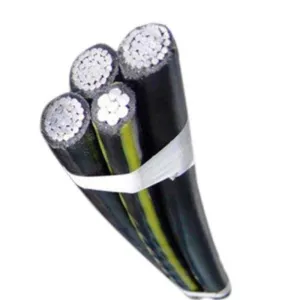
ABC Cable Low Voltage Overhead Aluminum Cable 4 Core 16mm² 0.6/1kv - Factory Directly Supply, Free Samples Available
Su clasificación: Cables de línea aislados de arribaVistas: 388Número:Tiempo de liberación: 2025-09-03 07:23:39The ABC (Aerial Bundled Cable) Low Voltage Overhead Aluminum Cable—featuring 4 cores of 16mm² cross-section, 0.6/1kV voltage rating, factory-direct supply, and free available samples—emerges as a cost-effective, reliable solution for low-voltage overhead power distribution across residential, commercial, and light utility sectors. Designed to meet the demands of modern urban and suburban electrical infrastructure, this cable balances mechanical practicality, electrical efficiency, and accessibility, making it a preferred choice for electrical contractors, municipal utilities, and small-to-medium project developers. By examining its core specifications, material advantages, factory supply benefits, and sample service, this summary highlights why it stands out as a versatile and user-friendly option in low-voltage overhead distribution networks. At the heart of this cable’s functionality is its 4-core 16mm² aluminum conductor configuration, tailored to deliver consistent performance for low-voltage applications. The 4-core design (3 phase conductors + 1 neutral conductor) aligns with global three-phase four-wire (3P+N) low-voltage systems, ensuring balanced power distribution that minimizes voltage fluctuations—critical for protecting sensitive equipment like residential smart appliances, commercial lighting, or small industrial tools. Each 16mm² aluminum conductor is engineered to meet the specific load demands of low-voltage networks: at 30°C ambient temperature, it offers an ampacity of 65–75 amps, sufficient to power a string of 15–20 modern LED street lights (each consuming 150–200W, totaling 2.25–4kW) or supply electricity to 8–12 average residential households (each with a typical peak load of 5–6kW). This capacity ensures the cable can handle peak usage periods—such as evening hours when residential appliances and commercial lighting are fully active—without overheating or voltage drop, a common issue in under-specifed cables. The aluminum conductor material is a key driver of the cable’s cost-effectiveness and practicality for overhead use. Aluminum is 30% lighter than copper conductors of the same cross-sectional area, reducing the mechanical load on utility poles and mounting brackets. For example, a 100-meter length of this 4-core 16mm² aluminum cable weighs approximately 32 kg, compared to 88 kg for a copper equivalent—making it easier for two-person installation crews to handle without specialized heavy-lifting equipment. This lightweight nature also extends the lifespan of utility poles by minimizing long-term structural stress, lowering maintenance costs for municipal utilities and project developers. Additionally, aluminum is 40–50% more affordable than copper, a significant advantage for budget-conscious projects (e.g., new residential subdivisions, small commercial complexes) where material costs can account for 30–40% of the total electrical budget. Modern aluminum conductors in this cable are treated with a zinc or aluminum oxide anti-corrosion coating, forming a protective barrier against moisture, salt spray (in coastal areas), and urban pollutants. This coating ensures the conductors maintain their electrical conductivity (≤1.15 Ω/km at 20°C) and mechanical strength for 25–30 years, matching the lifespan of typical low-voltage infrastructure and eliminating the need for frequent replacements. The 0.6/1kV voltage rating further solidifies the cable’s suitability for low-voltage applications. The 0.6kV phase-to-neutral rating aligns with the standard 230V single-phase power used in most residential and small commercial settings, while the 1kV phase-to-phase rating supports 400V three-phase systems common in light industrial facilities or commercial buildings with heavy electrical loads (e.g., small manufacturing workshops, retail stores with large HVAC units). This dual voltage capability eliminates the need for separate cables for single-phase and three-phase segments of a project, simplifying inventory management for contractors and reducing installation complexity. Electrical performance tests validate the cable’s reliability: it withstands 2.0kV (phase-to-neutral) and 3.0kV (phase-to-phase) voltage surges for 5 minutes without breakdown, protecting against transient spikes from equipment startup or grid fluctuations. Its insulation resistance—measured at ≥100 MΩ at 20°C using a megohmmeter—minimizes leakage current, ensuring efficient power transmission and reducing energy waste, a key consideration for utilities and project owners aiming to meet sustainability goals. The aerial bundled (ABC) design enhances the cable’s practicality for overhead installation, addressing the logistical challenges of traditional loose-conductor overhead systems. By integrating all 4 cores into a single bundled unit, the ABC design reduces clutter on utility poles, minimizing the risk of damage from vegetation (e.g., tree branches), wildlife (e.g., squirrels), or accidental contact with construction equipment. The cores are twisted in a helical pattern with a pitch of 15–20 times the cable’s outer diameter (approximately 250–300mm), enhancing flexibility for navigating the 30–50 meter spans between utility poles—standard spacing in urban and suburban areas. This flexibility also simplifies installation around obstacles like building corners or existing infrastructure, reducing the need for additional poles or complex routing. Many variants of this cable include an optional 12mm² galvanized steel messenger wire integrated into the bundle, providing additional mechanical support for spans of up to 50 meters. The messenger eliminates the need for separate support wires, cutting installation time by 30–40% compared to traditional overhead cables and lowering material costs. A standout advantage of this cable is its factory-direct supply model, which delivers significant benefits to customers. By sourcing directly from the manufacturer, contractors and project developers avoid the markup of intermediate distributors, reducing the total cost of the cable by 15–25%—a substantial saving for large-scale projects (e.g., a 500-meter residential street lighting project). Factory direct supply also ensures greater control over product quality and lead times: the cable is manufactured to strict standards (compliant with IEC 60502-1 and ANSI/ICEA S-94-649) and undergoes rigorous pre-shipment testing (including insulation resistance, voltage withstand, and conductor continuity checks) to ensure consistency. Lead times are typically 2–3 weeks for standard orders, with the manufacturer offering expedited production (1 week) for urgent projects—critical for meeting tight construction deadlines. Additionally, factory direct supply enables customization options, such as adding UV-resistant insulation for high-sunlight areas or anti-corrosion coatings for coastal regions, without the additional costs or delays associated with third-party suppliers. The availability of free samples further enhances the cable’s accessibility and customer confidence. Recognizing that low-voltage projects often require validation of compatibility with existing equipment (e.g., street light fixtures, distribution boxes) or installation tools, the manufacturer offers free 1–5 meter samples to qualified customers (electrical contractors, municipal utilities, project developers). Samples are shipped within 1–2 business days of request, allowing customers to: Inspect the cable’s physical properties (conductor stranding, insulation thickness, flexibility) to ensure it meets project requirements. Test compatibility with termination tools (e.g., insulation strippers, crimping lugs) and connected equipment (e.g., 0.6/1kV circuit breakers, street light connectors). Verify electrical performance through in-house tests (e.g., continuity checks, insulation resistance measurements) before committing to large orders. The sample service also includes a detailed datasheet with key specifications (ampacity, voltage rating, material composition) and a compatibility guide, helping customers make informed decisions. This risk-free validation process reduces the likelihood of costly mistakes (e.g., ordering incompatible cables) and builds trust between the manufacturer and customer. In terms of applications, this cable excels across diverse low-voltage scenarios: Residential Street Lighting: Municipalities use it to power LED street lights in suburban neighborhoods, leveraging its 16mm² ampacity to support 15–20 lights per span and its lightweight design to minimize pole load. Residential Subdivisions: Developers deploy it to distribute power from transformers to individual homes, with the 4-core design enabling balanced three-phase supply for residential HVAC systems and electric vehicle chargers. Small Commercial Areas: Retail strips and small office buildings use it to power lighting, POS systems, and small HVAC units, with the 0.6/1kV rating ensuring compatibility with standard commercial electrical systems. Light Utility Projects: It is used in park lighting, parking lot illumination, and small community centers, where its durability and cost-effectiveness make it an ideal choice for low-budget public infrastructure projects. In summary, the ABC Cable Low Voltage Overhead Aluminum Cable 4 Core 16mm² 0.6/1kV—backed by factory-direct supply and free samples—delivers a winning combination of performance, affordability, and accessibility. Its tailored design for low-voltage overhead use, aluminum conductor advantages, and customer-centric services (direct supply, free samples) make it a reliable solution for meeting the demands of modern residential, commercial, and light utility electrical infrastructure. Whether for a small street lighting project or a large residential subdivision, this cable provides the efficiency, durability, and cost savings that customers need to complete projects on time and within budget. -
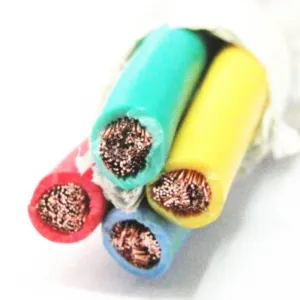
Flexible Rubber Insulated Cable H05rn-F H07rn-F 2 3 4 5 6 Core 4mm2 6mm2 10mm2 16mm2 25mm2
Su clasificación: Cable de bajo voltajeVistas: 313Número:Tiempo de liberación: 2025-09-11 05:56:18The Flexible Rubber Insulated Cables, specified under the designations H05RN-F and H07RN-F, represent a robust category of electrical cables engineered for flexibility, durability, and reliable performance in challenging environments. Available in 2 to 6 core configurations with conductor cross-sections ranging from 4mm² to 25mm², these cables are designed to meet stringent European standards (EN 50525) for heavy-duty applications where resistance to mechanical stress, moisture, and temperature variations is critical. At the core of these cables is their rubber insulation and sheathing, typically made from chloroprene or ethylene propylene diene monomer (EPDM) rubber. This material choice distinguishes them from PVC-insulated cables, offering superior flexibility even at low temperatures and enhanced resistance to oils, chemicals, and abrasion. The rubber compounds used are formulated to withstand continuous operating temperatures from -30°C to 90°C, making them suitable for both indoor and outdoor use in harsh climates, including construction sites, industrial facilities, and outdoor events. The H05RN-F and H07RN-F designations denote specific performance characteristics. The "H" indicates they are heavy-duty cables, while the numbers "05" and "07" refer to their voltage ratings: H05RN-F is rated for 300/500V, ideal for low-voltage power distribution, while H07RN-F is rated for 450/750V, suitable for higher-power applications. The "RN" signifies that they are rubber-insulated and sheathed with a braided reinforcement (often textile or steel), which enhances mechanical strength without compromising flexibility. The "-F" indicates they are flexible, a key attribute derived from their fine-stranded copper conductors. These cables are available in multiple core counts (2 to 6 cores) to accommodate diverse wiring needs. For example, 2-core cables are commonly used for simple power connections, while 3-core and 4-core variants are ideal for three-phase systems or applications requiring a neutral or ground conductor. The 5-core and 6-core options cater to more complex setups, such as machinery with integrated control systems that require separate power and signal lines. Conductor sizes range from 4mm² to 25mm², with each size corresponding to specific current-carrying capacities. The 4mm² and 6mm² cables are suitable for medium-power devices like portable tools or small motors, while 10mm² to 25mm² cables handle higher currents, making them suitable for large machinery, generators, or temporary power distribution on construction sites. All conductors are made from high-purity copper, ensuring excellent electrical conductivity and minimizing energy loss. A defining feature of these cables is their flexibility, achieved through fine-stranded copper conductors and supple rubber insulation. This allows them to be easily bent, coiled, and routed around obstacles, a critical advantage in dynamic environments where cables are frequently moved or repositioned. The braided reinforcement layer adds tensile strength, preventing stretching or damage during handling, while the rubber sheath resists cuts, impact, and UV radiation, ensuring longevity in rugged conditions. Applications for H05RN-F and H07RN-F cables are diverse and include construction sites, where they power tools, lighting, and temporary facilities; industrial plants, where they connect machinery and conveyors; outdoor events, such as concerts or festivals, for temporary power distribution; and marine environments, where their moisture resistance protects against corrosion. They are also commonly used in mining, agriculture, and emergency services, where reliability in harsh conditions is paramount. Compliance with EN 50525 ensures these cables meet strict safety standards, including flame retardancy and low smoke emission, reducing fire risks in enclosed spaces. They are also RoHS-compliant, free from hazardous substances, making them suitable for eco-sensitive applications. In summary, H05RN-F and H07RN-F flexible rubber insulated cables combine robust construction with exceptional flexibility, making them indispensable for demanding environments. Their range of core counts and conductor sizes, paired with resistance to temperature, chemicals, and mechanical stress, ensures they can adapt to diverse electrical needs. Whether powering construction equipment, industrial machinery, or temporary installations, these cables deliver consistent performance, safety, and durability where standard cables would fail.
Noticias
Categoría:
¡Sin resultados de búsqueda!
Caso
Categoría:
¡Sin resultados de búsqueda!
Video
Categoría:
¡Sin resultados de búsqueda!
Descargar
Categoría:
¡Sin resultados de búsqueda!
Reclutamiento
Categoría:
¡Sin resultados de búsqueda!
Productos recomendados
¡Sin resultados de búsqueda!



 Teléfono
 E-mail